Advice & guides › Prevention & Maintenance
Essential Combi Boiler Maintenance Tips for 2026
By The FixDelivered Team · Updated 2026-09-26 · 7 min read
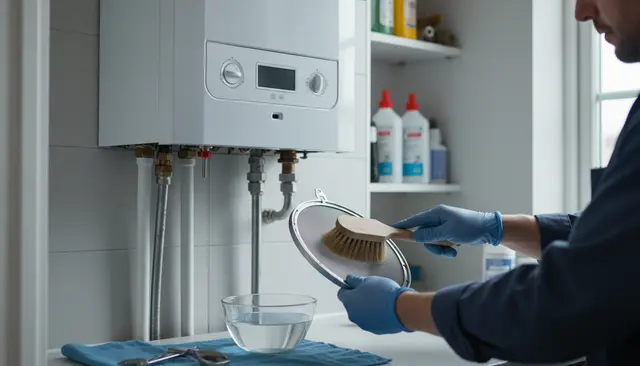
Your combi boiler is the heart of your home's heating and hot water system. Neglecting its maintenance can lead to inconvenient breakdowns, cold showers, and expensive repair bills. By performing a few simple checks and understanding when to call in the professionals, you can significantly extend its lifespan, improve efficiency, and ensure a warm home all year round. This guide provides practical, actionable advice for UK homeowners, updated for 2026.
Why Combi Boiler Maintenance Matters
Regular maintenance isn't just about preventing breakdowns; it's about optimising your boiler's performance. An inefficient boiler uses more energy to heat your home, leading to higher utility bills. Consistent care can help identify minor issues before they escalate into major, costly repairs. It also ensures your boiler operates safely, which is paramount when dealing with gas appliances.
1. Check Your Boiler Pressure Regularly (DIY)
Maintaining the correct water pressure is crucial for your combi boiler's operation. Low pressure is a common cause of boilers not firing up or providing adequate heat. High pressure can also indicate a problem.
Tools Needed:
- Your boiler's instruction manual
- A small screwdriver (if your filling loop requires one)
- An old towel or cloth
Step-by-Step Guide:
- Locate the Pressure Gauge: This is usually a small dial or digital display on the front panel of your boiler.
- Check the Reading: For most combi boilers, the ideal pressure when the heating is off and the system is cold is between 1 and 1.5 bar. Some manufacturers allow up to 2 bar. Consult your boiler's manual for the exact recommended range.
- If Pressure is Low: You'll need to repressurise the system using the external filling loop. This is typically a silver braided hose with two valves, often located underneath the boiler. Ensure both ends are securely connected.
- Open the Valves: Slowly open one valve, then the other, watching the pressure gauge. You should hear water entering the system.
- Reach Ideal Pressure: Close both valves once the gauge reaches the recommended pressure (e.g., 1.5 bar). It's important not to overfill.
- Disconnect (if applicable): Some filling loops are designed to be removed after use. Consult your manual.
Safety Caution:
Never overfill your system. If you're unsure or uncomfortable, stop and seek professional help.
When to Call a Professional:
- If the pressure drops frequently (e.g., weekly or monthly), as this could indicate a leak in the system.
- If the pressure consistently goes too high (above 2.5-3 bar).
- If you cannot locate or operate your filling loop.
- If repressurising doesn't resolve the low pressure issue.
2. Bleed Your Radiators (DIY)
Cold spots on your radiators, even when the heating is on, often mean there's air trapped inside. Bleeding your radiators releases this trapped air, allowing hot water to circulate properly and improving efficiency.
Tools Needed:
- A radiator key (available at most DIY stores)
- An old cloth or towel
- A small container or mug to catch any drips
Step-by-Step Guide:
- Turn Off Heating: Ensure your central heating is switched off and the system has cooled down. This prevents hot water from spraying out.
- Locate Bleed Valve: This is usually a small, square or slotted nut on one end of the radiator, near the top.
- Prepare: Place your cloth or container under the valve to catch any water.
- Open Valve: Insert the radiator key and slowly turn it anti-clockwise. You should hear a hissing sound as air escapes.
- Close Valve: Once water starts to seep out (instead of air), immediately close the valve by turning the key clockwise.
- Repeat: Work your way around all radiators in your home, starting with the ones furthest from the boiler.
- Check Pressure: After bleeding, your boiler pressure might have dropped slightly. Check the gauge and repressurise if necessary (see point 1).
Safety Caution:
Water can be hot if the system hasn't fully cooled. Only open the valve slightly to avoid a sudden spray.
When to Call a Professional:
- If radiators remain cold despite bleeding them multiple times.
- If you hear persistent gurgling noises after bleeding.
- If you cannot locate the bleed valve or it appears stuck/damaged.
- If bleeding causes a significant leak.
3. Get an Annual Boiler Service (Professional Only)
This is arguably the most critical maintenance step and should never be skipped. An annual service by a Gas Safe registered plumber ensures your boiler is running safely and efficiently.
Crucial Safety Note: Any work on the internal components of a gas boiler MUST only be carried out by a Gas Safe registered engineer. Attempting to do so yourself is extremely dangerous and illegal. Always ask to see their Gas Safe ID card.
During a service, the engineer will:
- Check for gas leaks and corrosion.
- Inspect key components like the burner, heat exchanger, and seals.
- Clean internal parts as needed.
- Test the flue and emissions.
- Check the operating pressure and temperature.
- Ensure all safety devices are functioning correctly.
- Provide a service report.
An annual service typically costs between £80 and £120, depending on your location and the complexity of your boiler. This small investment can prevent major breakdowns, save you money on energy bills, and potentially extend your boiler's life by years.
4. Insulate Exposed Pipes (DIY)
In colder months, pipes in unheated areas (like lofts, garages, or outside walls) are susceptible to freezing. Frozen pipes can burst, causing significant water damage and leaving you without heating or hot water.
Tools Needed:
- Pipe insulation (foam lagging, readily available at DIY stores)
- Measuring tape
- Utility knife or scissors
- Duct tape (optional, for extra security)
Step-by-Step Guide:
- Identify Vulnerable Pipes: Look for pipes that run through cold spaces.
- Measure and Cut: Measure the length of the pipe sections and cut the insulation to size.
- Fit Insulation: Most pipe insulation comes with a slit down one side. Simply push it open and fit it around the pipe.
- Secure: Ensure the insulation is snug. You can use duct tape to secure any seams or open ends, especially at bends.
Safety Caution:
Be careful when using a utility knife. Ensure pipes are not hot before handling. If you find any existing leaks, do not attempt to insulate them; address the leak first.
When to Call a Professional:
- If you discover a burst pipe or a significant leak.
- If you're unsure which pipes to insulate or have difficult-to-reach areas.
5. Run Your Heating Regularly
Even during warmer months, it's a good idea to switch on your central heating for 10-15 minutes once a month. This helps to prevent pumps and valves from seizing up due to inactivity, ensuring everything is in working order when you truly need it.
6. Understand Boiler Error Codes
Most modern combi boilers have a digital display that shows error codes when a fault occurs. Familiarise yourself with your boiler's manual to understand what these codes mean. Sometimes, a simple reset (following the manual's instructions) can resolve the issue, but often an error code indicates a problem that requires professional attention.
7. Keep the Area Around Your Boiler Clear
Boilers require adequate ventilation to operate safely and efficiently. Avoid storing items directly in front of or on top of your boiler, as this can block air vents and create a fire hazard or cause the boiler to overheat. Ensure the flue terminal outside your home is also clear of obstructions like leaves or birds' nests.
When to Call a Professional Plumber
While some maintenance tasks are suitable for DIY, many boiler issues require the expertise of a qualified professional. You should always call a Gas Safe registered plumber if you notice any of the following:
- A persistent drop in boiler pressure, indicating a leak.
- No hot water or heating despite checking pressure and bleeding radiators.
- Unusual noises coming from your boiler (banging, gurgling, whistling).
- A strange smell, especially gas (turn off your gas supply immediately and call an emergency plumber and your gas provider).
- Water leaks from the boiler itself.
- Your boiler keeps switching itself off.
- Any issues with the flue or carbon monoxide alarm activation.
For any boiler concerns beyond simple DIY, remember that FixDelivered connects you with vetted, qualified local plumbers. We make it easy to find emergency plumbers near you, with upfront agreed call-out fees and a refundable booking fee if we can't find someone. Should your boiler break down unexpectedly, you can quickly tell us your emergency and get assistance.
By following these essential combi boiler maintenance tips, you'll contribute significantly to the longevity, efficiency, and safety of your home's heating system. Regular care and knowing when to call a professional will keep your home warm and your bills manageable.
Frequently asked questions
How often should I service my combi boiler?
It is highly recommended to have your combi boiler serviced annually by a Gas Safe registered engineer. This ensures safety, efficiency, and can help prevent costly breakdowns.
What is the ideal pressure for a combi boiler?
Typically, the ideal pressure for a cold combi boiler is between 1 and 1.5 bar. Always check your boiler's specific instruction manual for the manufacturer's recommended range.
Why do my radiators have cold spots?
Cold spots on radiators usually indicate trapped air within the system. You can often resolve this by bleeding your radiators using a radiator key, then checking and adjusting your boiler pressure if needed.
Can I fix a gas leak from my boiler myself?
Absolutely NOT. If you suspect a gas leak (e.g., a smell of gas), immediately turn off your gas supply at the meter, open windows, evacuate the property, and call an emergency Gas Safe registered plumber and your gas network provider. Never attempt to fix a gas leak yourself.
Need a plumber now? Tell us your emergency and FixDelivered will find and confirm an available local plumber near you, usually within the hour.
Written by the FixDelivered Team. Reviewed by Rupert Lowe, Editor. Last updated 2026-09-26.